Can one line serve domestic and export grades?
Usually, if grade rules, output lanes, packing and traceability are planned for both markets.
 INNAWEI英纳伟
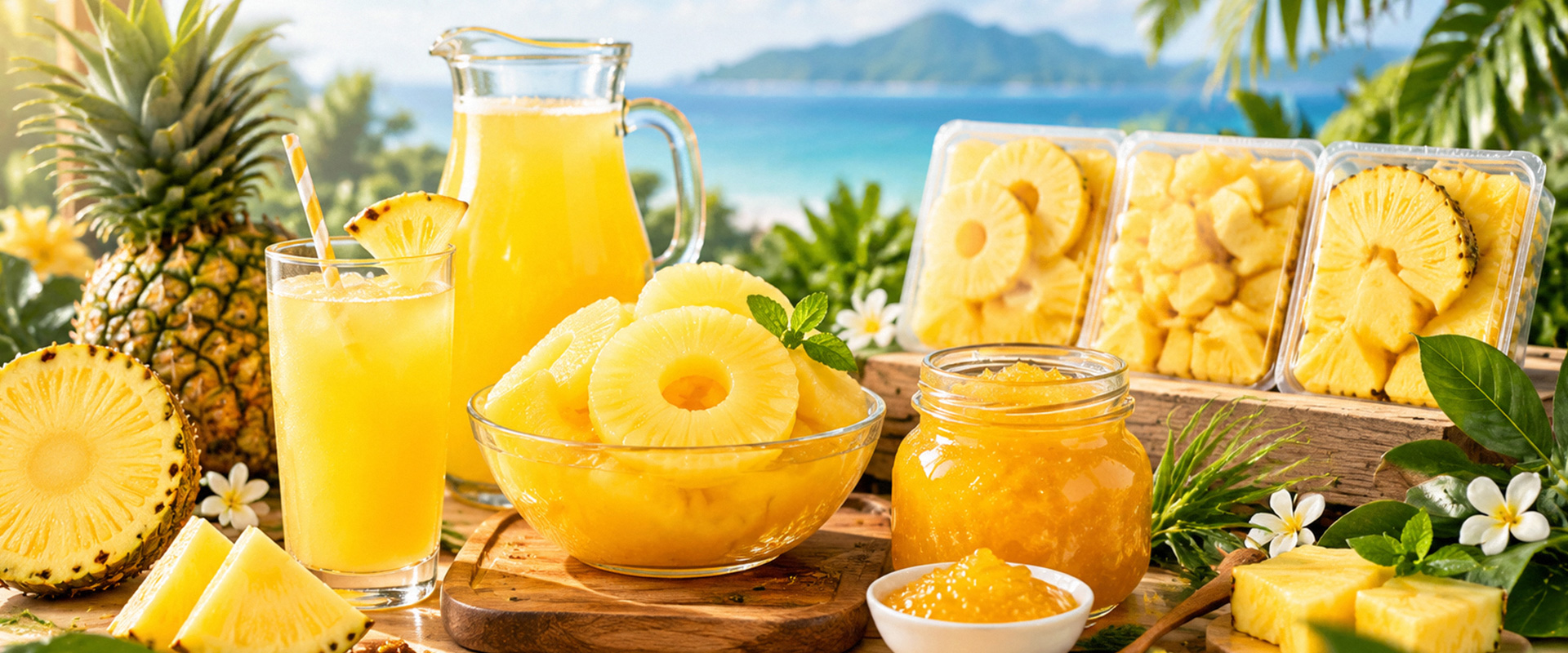
Pineapple processing is configured for the intended product route. Fresh fruit may be sorted and packed, while suitable fruit can be prepared for juice, jam or canned products. The original page emphasizes defining buyer requirements for fruit size, appearance, maturity and carton packing before choosing equipment.
Define the pineapple grades buyers need before choosing capacity. Connect washing, drying, grading and carton packing, with optional inspection or waxing assessed for the project.
Agree weight, count per carton, color, crown condition, defects and maturity before selecting capacity or inspection equipment.
| Requirement | What to define | Planning focus |
|---|---|---|
| Fruit size | Weight, diameter or fruit count | Set grading criteria around the intended sales market. |
| Appearance | Color, shape, crown and defects | Vision inspection checks fruit size, color and visible defects. |
| Maturity | Agreed external or quality indicators | Separate size and quality grades before carton packing. |
| Internal condition | Buyer concern about internal variation | Evaluate optional inspection |
| Packing standard | Package and net weight | Coordinate carton supply, fruit count, net weight, arranging, labels, sealing, palletizing and temporary holding with grader output. |
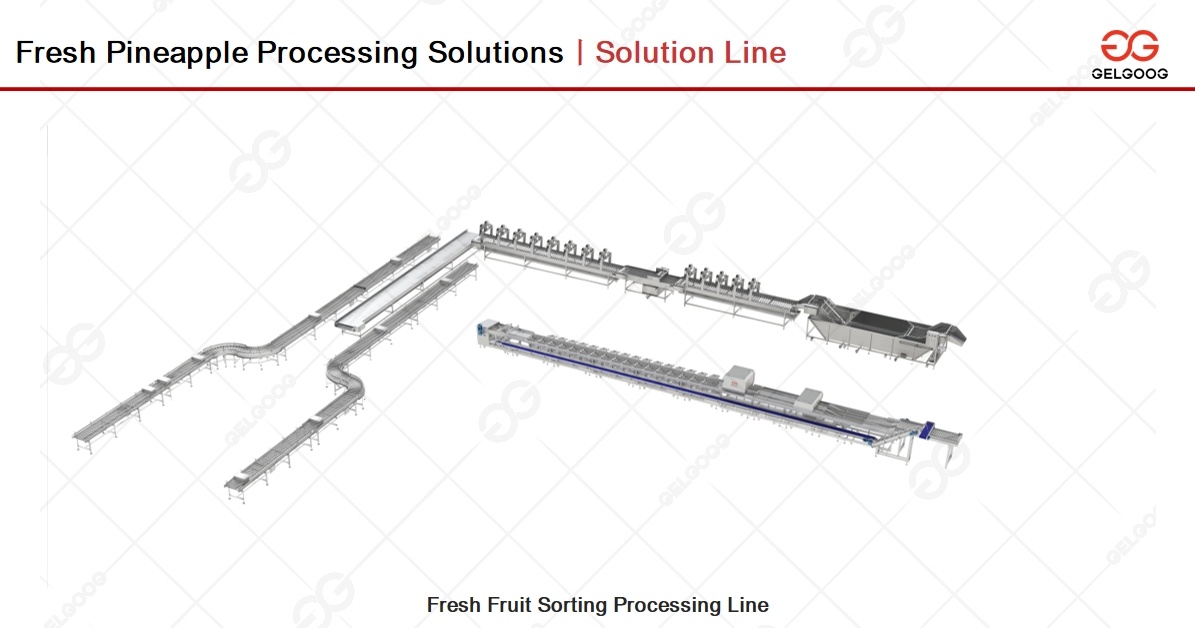
Share fruit type, samples, daily capacity and current grading rules to prepare a preliminary configuration.
Choose practical outlets for export, domestic, small fruit, reinspection and suitable processing fruit, with a packing destination for each.
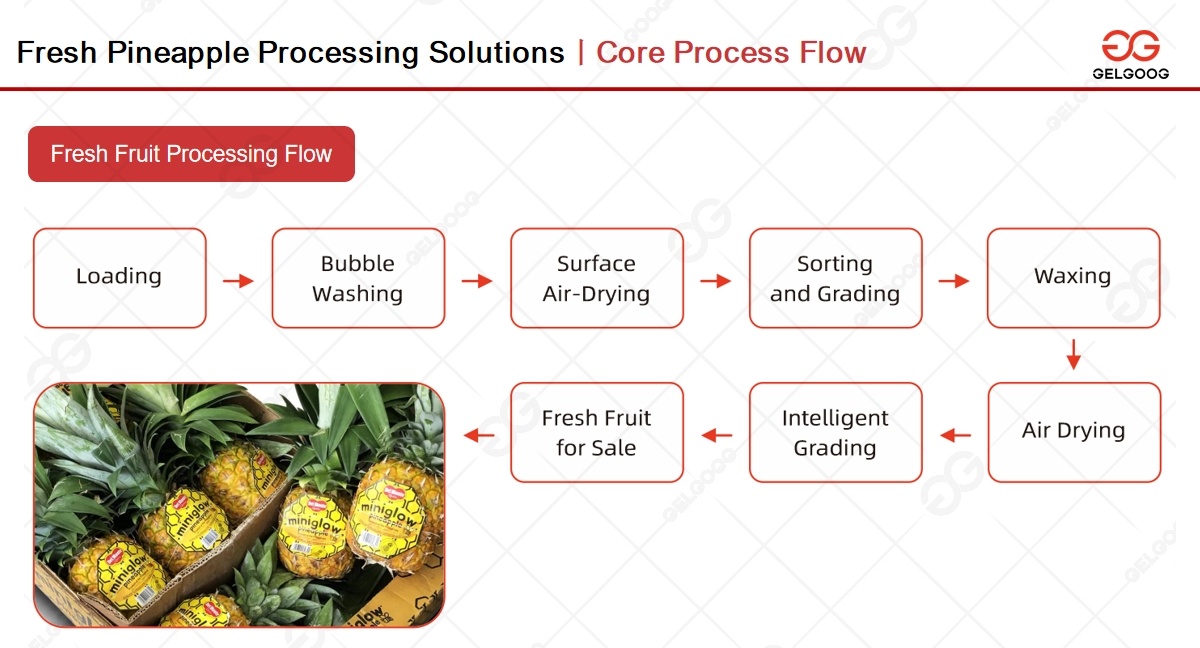
Link receiving, preselection, washing, drying, grading and packing. Evaluate internal inspection and waxing only where required.
| Processing stage | Main purpose | Project check |
|---|---|---|
| Receiving and sorting | Remove unsuitable product and visible impurities before processing. | Where will rejected fruit go? |
| Washing | Remove surface dirt and residues with a product-matched washing stage. | Which sanitation and water controls? |
| Drying | Remove surface moisture before the next processing or packing stage. | Can drying match the line speed? |
| Grading | Direct inspected products into the selected commercial grades. | Which grades can be sold separately? |
| Packaging | Pack the prepared product in the selected commercial format. | Can packing keep up with grading? |
Coordinate carton supply, fruit count, net weight, arranging, labels, sealing, palletizing and temporary holding with grader output.
Test representative pineapple size and condition, grade rules, outlets, handling and packing connection before final acceptance.
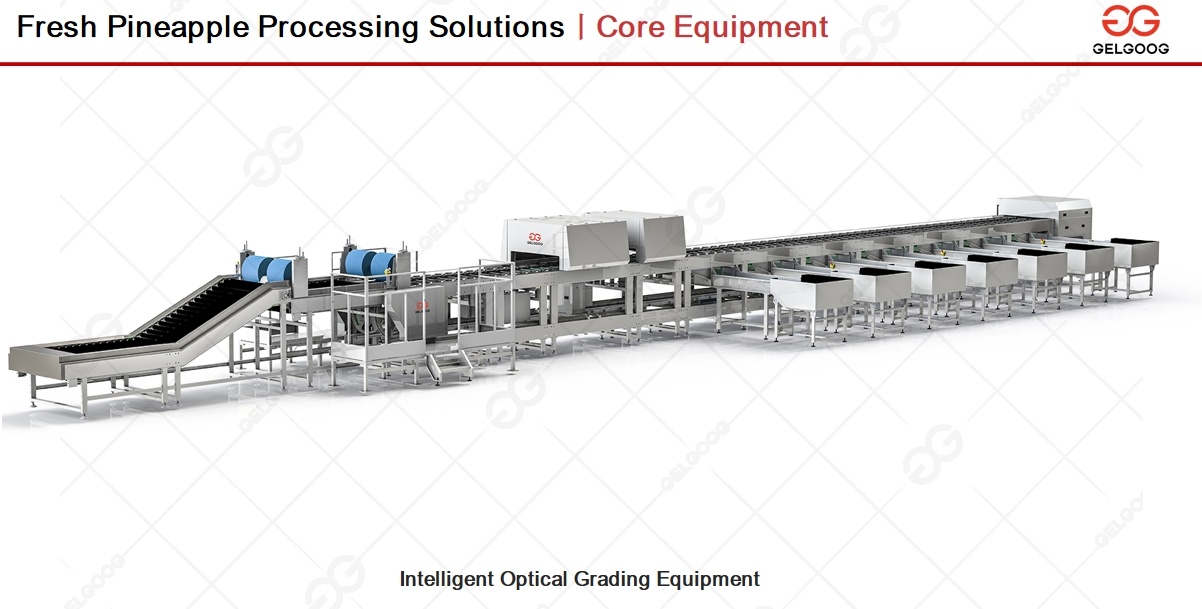
Review peeling, bulb separation and sorting modules alongside the complete line.
Confirm raw-material suitability, selected equipment, product changeovers and packaging requirements during project planning.
Usually, if grade rules, output lanes, packing and traceability are planned for both markets.
No. Assess it when required appearance or size consistency exceeds practical manual sorting at the target output.
Cosmetically off-grade fruit may be usable, but spoilage, contamination, fermentation and internal condition require separate assessment.
No. Evaluate waxing against fruit condition, buyer specification, packaging and destination-market requirements.
Test representative pineapple size and condition, grade rules, outlets, handling and packing connection before final acceptance.
Use target output, available workshop space, utilities and package requirements to define scope and layout.
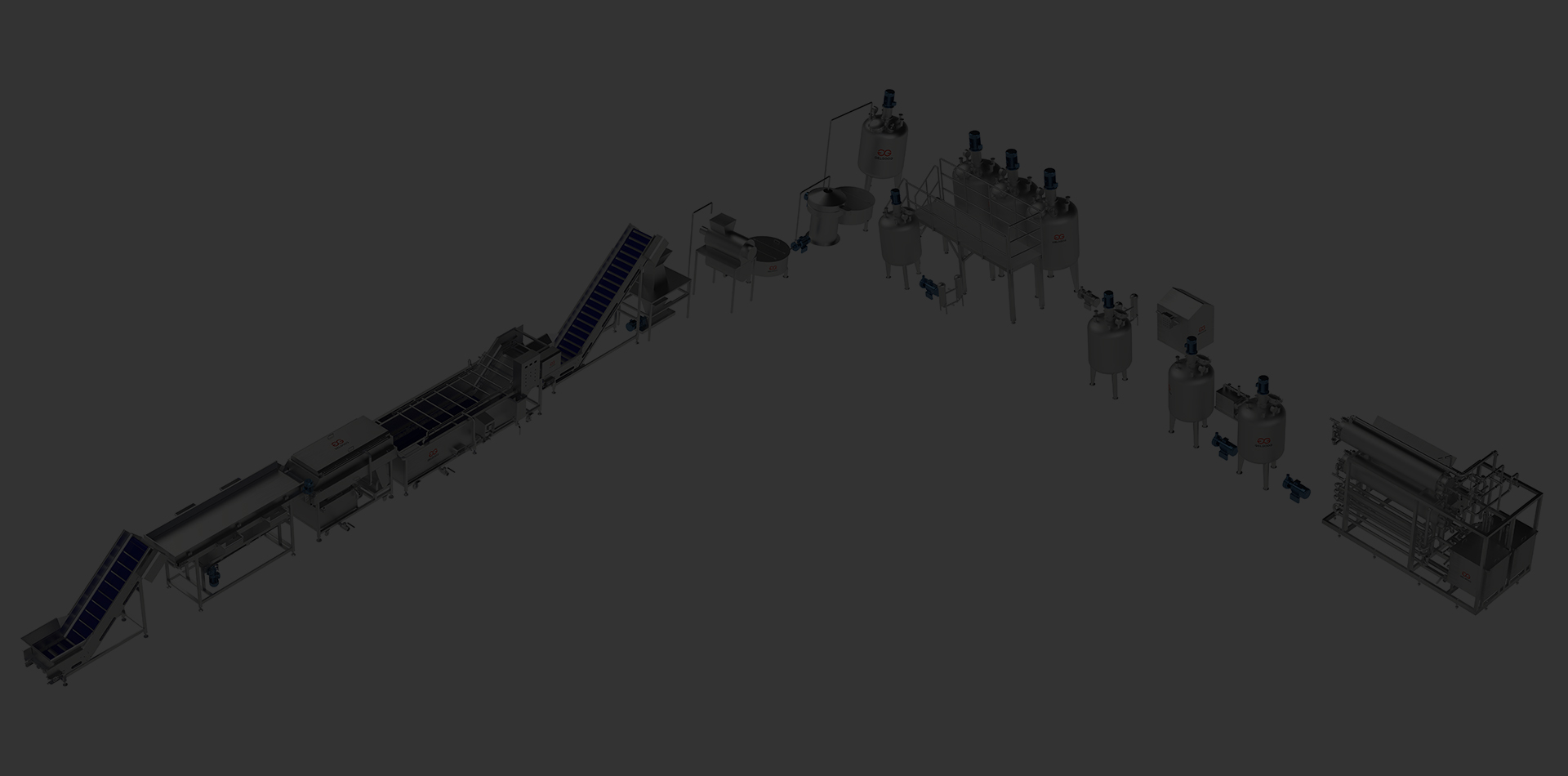
Set grading criteria around the intended sales market.
Separate size and quality grades before carton packing.
Balance washing, grading and packing to avoid bottlenecks.
Gentle conveying helps protect fruit surfaces.
Assess suitable off-grade fruit for another processing route.
Confirm capacity with representative seasonal fruit.
Feed fruit steadily into the next processing stage.
Use a bubble-washing stage to loosen surface dirt.
Use airflow to remove water from the product surface.
Direct inspected products into the selected commercial grades.
Inspect fruit against the configured size, color and defect criteria.
Define the pineapple grades buyers need before choosing capacity. Connect washing, drying, grading and carton packing, with optional inspection or waxing assessed for the project.
Agree weight, count per carton, color, crown condition, defects and maturity before selecting capacity or inspection equipment.
| Requirement | What to define | Planning focus |
|---|---|---|
| Fruit size | Weight, diameter or fruit count | Set grading criteria around the intended sales market. |
| Appearance | Color, shape, crown and defects | Vision inspection checks fruit size, color and visible defects. |
| Maturity | Agreed external or quality indicators | Separate size and quality grades before carton packing. |
| Internal condition | Buyer concern about internal variation | Evaluate optional inspection |
| Packing standard | Package and net weight | Coordinate carton supply, fruit count, net weight, arranging, labels, sealing, palletizing and temporary holding with grader output. |
Share fruit type, samples, daily capacity and current grading rules to prepare a preliminary configuration.
Choose practical outlets for export, domestic, small fruit, reinspection and suitable processing fruit, with a packing destination for each.
Link receiving, preselection, washing, drying, grading and packing. Evaluate internal inspection and waxing only where required.
| Processing stage | Main purpose | Project check |
|---|---|---|
| Receiving and sorting | Remove unsuitable product and visible impurities before processing. | Where will rejected fruit go? |
| Washing | Remove surface dirt and residues with a product-matched washing stage. | Which sanitation and water controls? |
| Drying | Remove surface moisture before the next processing or packing stage. | Can drying match the line speed? |
| Grading | Direct inspected products into the selected commercial grades. | Which grades can be sold separately? |
| Packaging | Pack the prepared product in the selected commercial format. | Can packing keep up with grading? |
Coordinate carton supply, fruit count, net weight, arranging, labels, sealing, palletizing and temporary holding with grader output.
Test representative pineapple size and condition, grade rules, outlets, handling and packing connection before final acceptance.
Review peeling, bulb separation and sorting modules alongside the complete line.
Confirm raw-material suitability, selected equipment, product changeovers and packaging requirements during project planning.
Usually, if grade rules, output lanes, packing and traceability are planned for both markets.
No. Assess it when required appearance or size consistency exceeds practical manual sorting at the target output.
Cosmetically off-grade fruit may be usable, but spoilage, contamination, fermentation and internal condition require separate assessment.
No. Evaluate waxing against fruit condition, buyer specification, packaging and destination-market requirements.
Test representative pineapple size and condition, grade rules, outlets, handling and packing connection before final acceptance.
Use target output, available workshop space, utilities and package requirements to define scope and layout.
Set grading criteria around the intended sales market.
Separate size and quality grades before carton packing.
Balance washing, grading and packing to avoid bottlenecks.
Gentle conveying helps protect fruit surfaces.
Assess suitable off-grade fruit for another processing route.
Confirm capacity with representative seasonal fruit.
Feed fruit steadily into the next processing stage.
Use a bubble-washing stage to loosen surface dirt.
Use airflow to remove water from the product surface.
Direct inspected products into the selected commercial grades.
Inspect fruit against the configured size, color and defect criteria.
Design pineapple jam around texture, fruit-piece size, recipe changes and package format. Select batch, continuous or hybrid cooking together with pumps and fillers.
Retail jam, fruit preparation, bakery filling and bulk products have different needs for spreadability, viscosity, fruit particles and downstream use.
| Product format | Planning focus |
|---|---|
| Retail jam | Spreadability, texture and jar appearance |
| Fruit preparation | Select smooth, pulpy, diced or chunky pineapple formats upstream. Particle size affects cooking, pumps, fillers and final appearance. |
| Bakery filling | Viscosity, fruit distribution and baking behavior |
| Food-service or bulk jam | Large packs, batch efficiency and handling |
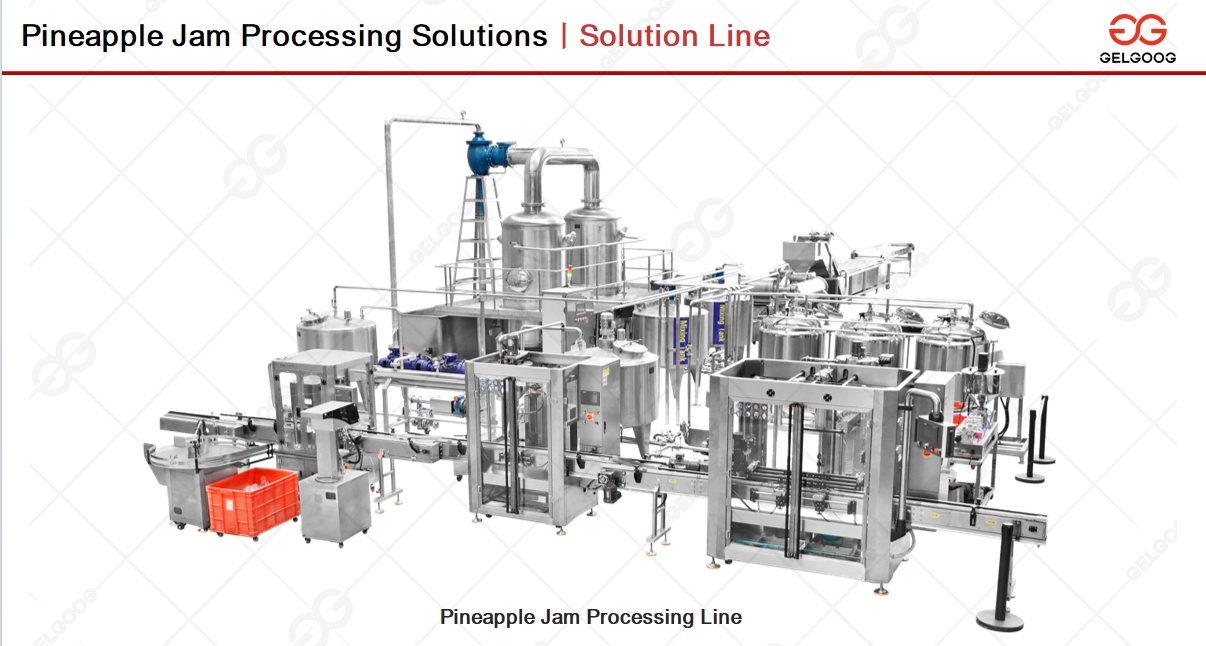
Use target output, available workshop space, utilities and package requirements to define scope and layout.
Select smooth, pulpy, diced or chunky pineapple formats upstream. Particle size affects cooking, pumps, fillers and final appearance.
Match cooking mode to recipe stability, sustained volume, SKU range and cleaning or changeover frequency.
| Production mode | Suitable when | Main decision |
|---|---|---|
| Batch cooking | Several recipes or short seasonal runs | Cleaning and changeover time |
| Continuous production | Stable recipe and sustained volume | Continuous feed and packing |
| Hybrid configuration | Main product with occasional other SKUs | Plan shared and dedicated modules for practical changeovers. |
Check product behavior during pumping, filling, cooling and intended use; jars, pouches and bulk formats need different controls.
| Product format | Planning focus |
|---|---|
| Glass jars | Check product behavior during pumping, filling, cooling and intended use; jars, pouches and bulk formats need different controls. |
| PET jars or cups | Match container material, fill temperature, shelf-life target, cold chain and distribution route before selecting the filler. |
| Stand-up pouches | Evaluate piece size, viscosity, pouch opening and filler design together; do not assume every pouch filler is compatible. |
| Bakery bags or bulk packs | Match pumps and fillers to viscosity and fruit-piece size. |
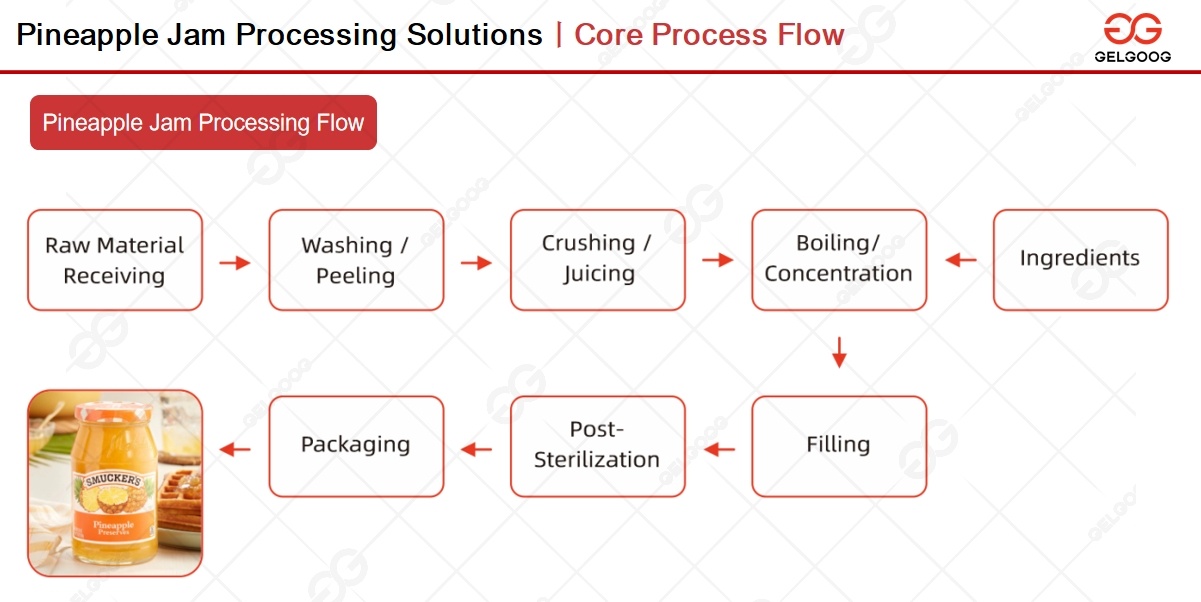
Plan ingredient dosing, fruit ratios, cooking settings, cleaning and records before changing product recipes.
Confirm raw-material suitability, selected equipment, product changeovers and packaging requirements during project planning.
Potentially, if texture, fruit pieces, pumps, filling and cleaning requirements are planned together.
No. Choose the cooking route from the product, recipe, desired quality and operating model.
Select smooth, pulpy, diced or chunky pineapple formats upstream. Particle size affects cooking, pumps, fillers and final appearance.
Evaluate piece size, viscosity, pouch opening and filler design together; do not assume every pouch filler is compatible.
Share raw-material photos, dimensions, daily input, target snack, package format, workshop space and utility conditions.
Use target output, available workshop space, utilities and package requirements to define scope and layout.
Match preparation to smooth jam, fruit pieces or bakery filling.
Control particle size before cooking and filling.
Choose batch or continuous operation for recipes and volumes.
Match pumps and fillers to viscosity and fruit-piece size.
Coordinate preparation and transfer for even fruit distribution.
Plan shared and dedicated modules for practical changeovers.
Crush prepared fruit to the required pulp or particle size.
Cook the fruit mixture under the selected recipe and temperature controls.
Dose the prepared product into its selected container.
Plan canned pineapple from usable flesh yield to finished cans. Match peeling, coring, cut shape, filling, sealing and thermal processing to the selected container.
Agree cut shape, container size, drained weight, syrup or juice medium and accepted appearance before equipment selection.
| Requirement | Meaning |
|---|---|
| Product cut | Rings, slices, chunks or tidbits |
| Container size | Match filling, sealing and thermal treatment to the container. |
| Drained weight | Coordinate fruit dosing and liquid ratio for drained weight. |
| Filling medium | Syrup, light syrup or juice |
| Product appearance | Accepted cut, color and visible-defect range |
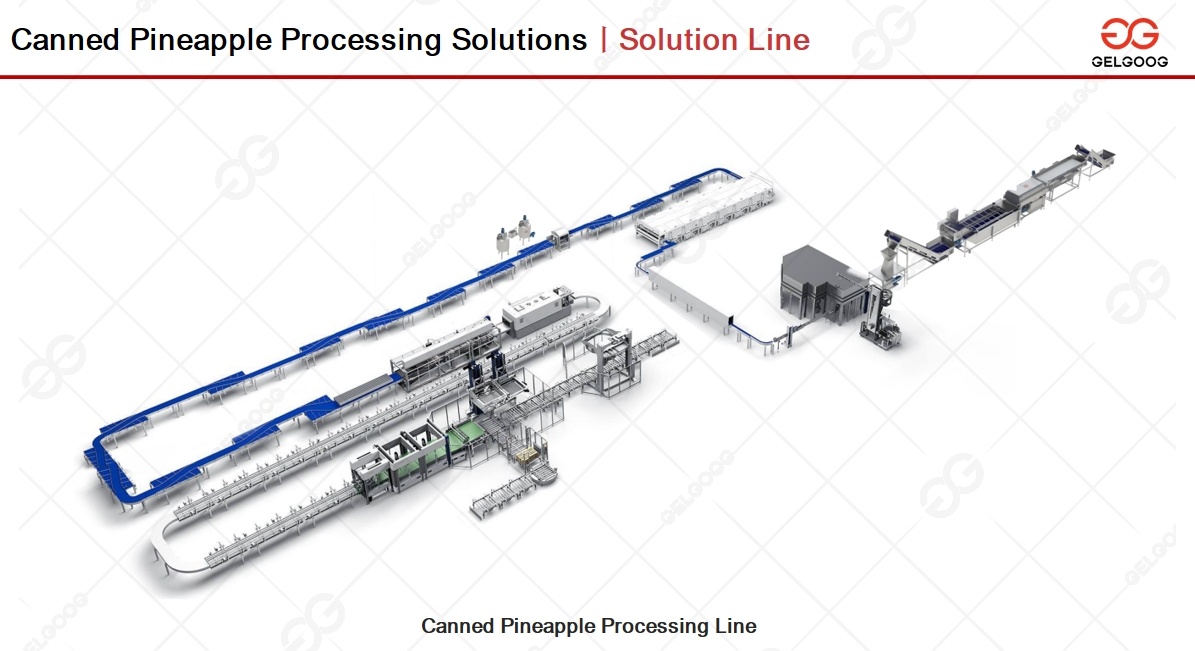
Use target output, available workshop space, utilities and package requirements to define scope and layout.
Distinguish whole-fruit input, prepared flesh, cut fruit, filled cans and accepted finished cans when comparing proposals.
| Capacity basis | Meaning |
|---|---|
| Expected raw input | Whole fruit entering preparation |
| Prepared fruit output | Usable flesh after peeling, coring and trimming |
| Cut fruit output | Cut the prepared product into the required strips, slices or pieces. |
| Filled cans per hour | Dose the prepared product into its selected container. |
| Finished saleable output | Accepted cans after sealing, heating, cooling and inspection |
Evaluate variety, diameter, firmness, peel thickness, core size and internal defects with representative lots before promising usable yield.
Connect inspection, peeling, coring, trimming and ring, chunk or tidbit cutting with fruit dosing, liquid dosing and sealing.
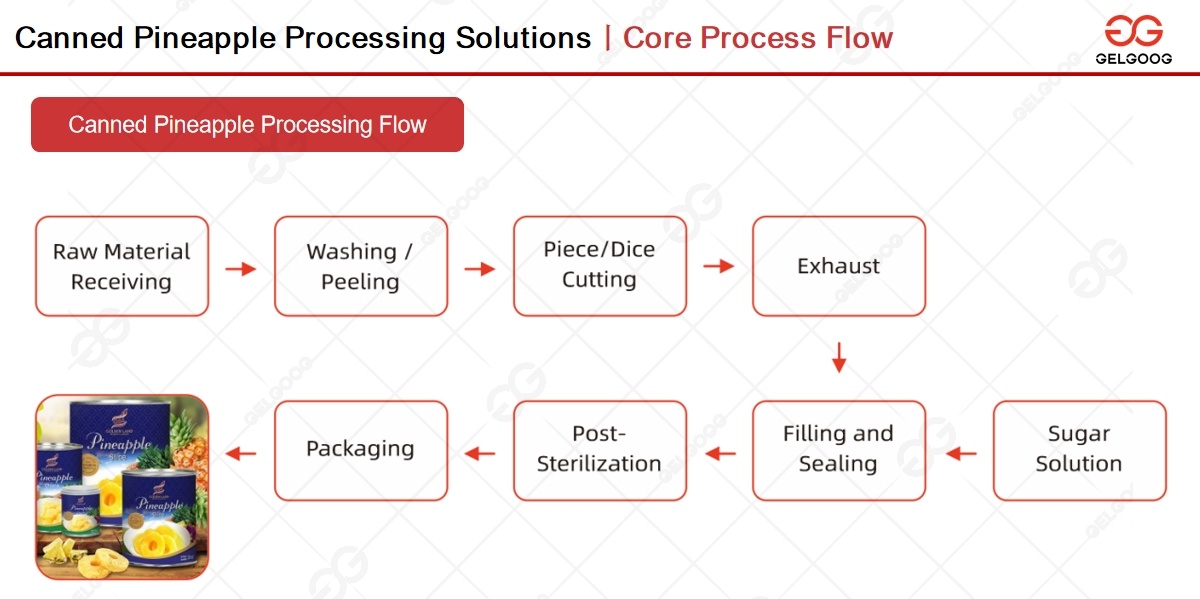
Use actual pineapple samples to assess usable flesh, trimming loss, cut appearance and filling behavior.
Match fruit-to-liquid ratio, container handling, closure integrity and validated heating and cooling to the selected product.
Confirm raw-material suitability, selected equipment, product changeovers and packaging requirements during project planning.
Distinguish whole-fruit input, prepared flesh, cut fruit, filled cans and accepted finished cans when comparing proposals.
Evaluate variety, diameter, firmness, peel thickness, core size and internal defects with representative lots before promising usable yield.
Potentially, with the appropriate cutting modules, handling and filling arrangements planned for each format.
Cosmetically off-grade fruit may be usable, but spoilage, contamination, fermentation and internal condition require separate assessment.
Test representative pineapple size and condition, grade rules, outlets, handling and packing connection before final acceptance.
Use target output, available workshop space, utilities and package requirements to define scope and layout.
Match preparation and filling to rings, chunks or tidbits.
Calculate capacity from whole fruit to saleable cans.
Consider fruit size, peel, core and firmness in usable yield.
Coordinate fruit dosing and liquid ratio for drained weight.
Match filling, sealing and thermal treatment to the container.
Validate the configuration with representative fruit samples.
Remove air from filled containers before the selected sealing process.
Dose the prepared product into its selected container.
Apply the validated container thermal process, then cool the packaged product.
Choose NFC juice, concentrate, pulp drink or blended beverage before configuring extraction and downstream treatment. Calculate capacity separately for fruit input, extraction and filled product.
NFC juice, concentrate, pulp drinks, blended juice and nectar differ in extraction, recipe, storage and filling requirements.
| Product format | What to define |
|---|---|
| NFC or chilled juice | Match container material, fill temperature, shelf-life target, cold chain and distribution route before selecting the filler. |
| Pineapple concentrate | Extraction, concentration, bulk storage and transport |
| Pulp-containing drink | No. Evaluate homogenization from pulp level, desired texture, stability and the selected beverage formulation. |
| Mixed-fruit juice | Fruit ratios, blending and formula management |
| Beverage or nectar | Recipe, dosing, treatment and package |
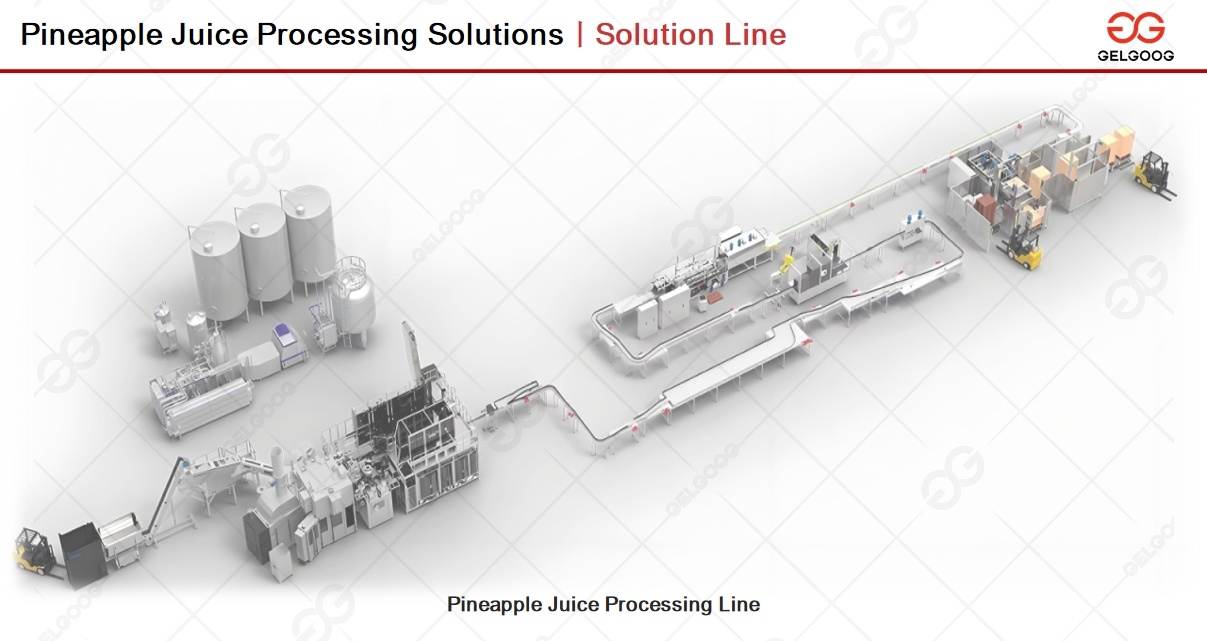
Use target output, available workshop space, utilities and package requirements to define scope and layout.
Cosmetically off-grade fruit may be usable, but spoilage, contamination, fermentation and internal condition require separate assessment.
Calculate received fruit, prepared flesh, extracted juice or pulp, formulated beverage and filled output separately.
| Capacity basis | Meaning |
|---|---|
| Expected raw input | Whole fruit received |
| Prepared fruit capacity | Fruit after peeling, trimming and core removal |
| Extraction capacity | Juice or pulp before standardization |
| Finished beverage capacity | Bulk or filled product after formulation and treatment |
Evaluate refining, blending, degassing, homogenization, concentration or thermal treatment only where the selected juice product needs them.
| Equipment module | Suitable when |
|---|---|
| Refining | When pulp texture needs control |
| Homogenization | No. Evaluate homogenization from pulp level, desired texture, stability and the selected beverage formulation. |
| Deaeration | When dissolved air affects product quality |
| Vacuum concentration | For concentrate or industrial ingredient routes |
| CIP system | Plan accessible surfaces and suitable cleaning options. |
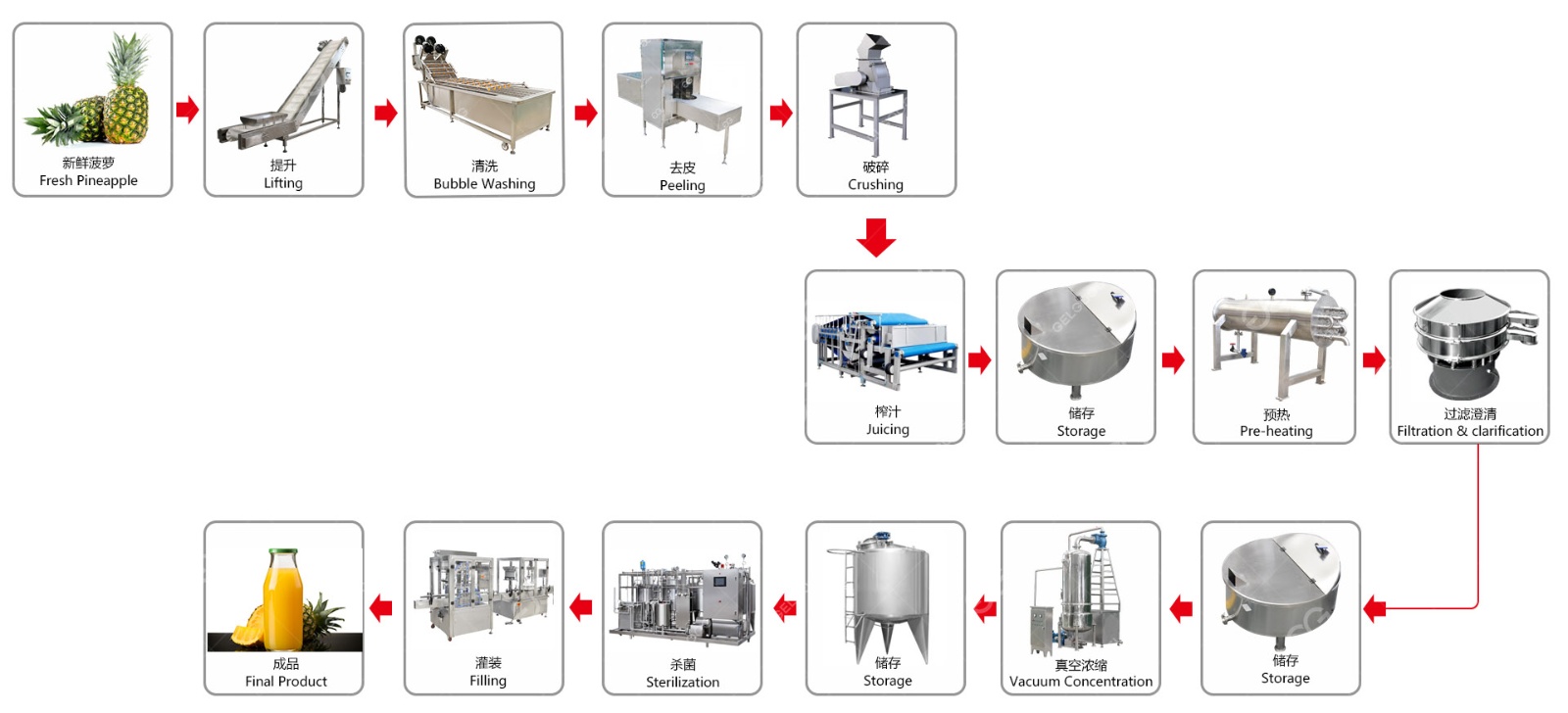
Match container material, fill temperature, shelf-life target, cold chain and distribution route before selecting the filler.
Review peeling, bulb separation and sorting modules alongside the complete line.
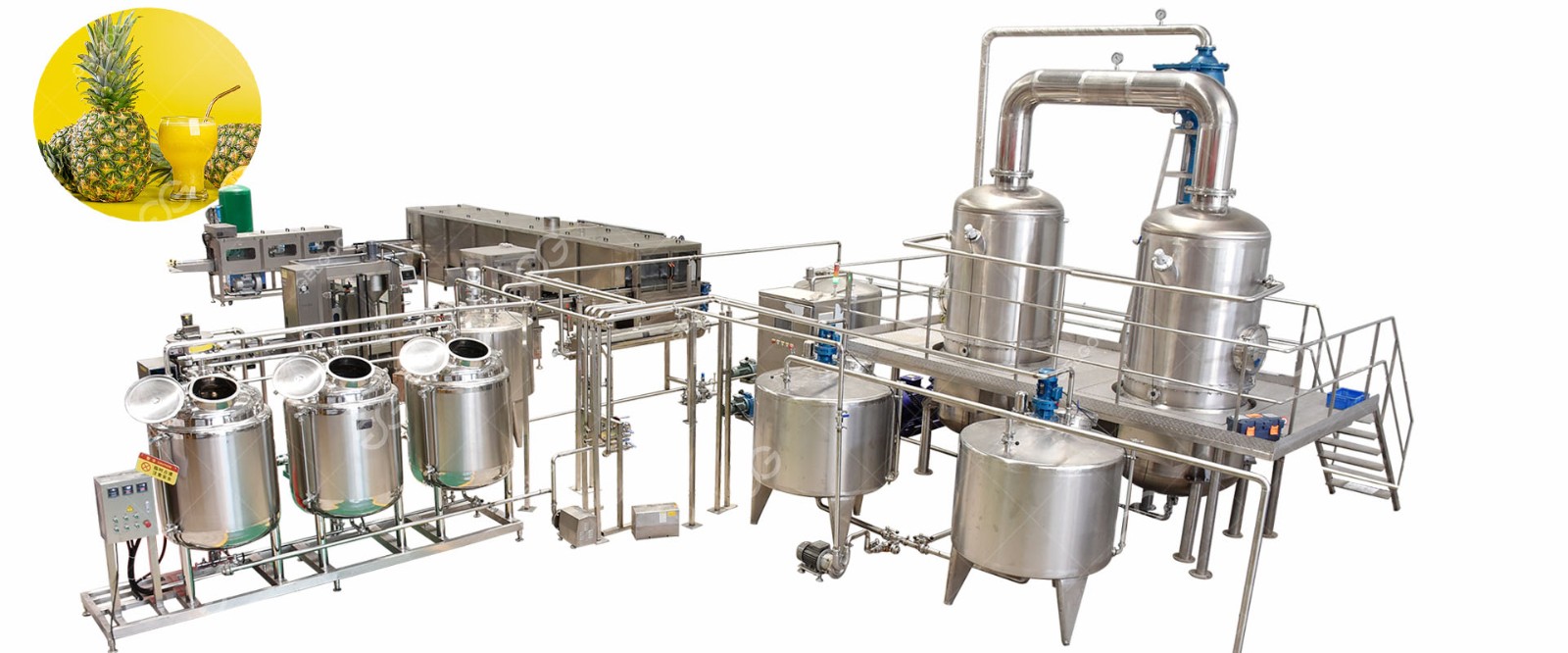
Confirm raw-material suitability, selected equipment, product changeovers and packaging requirements during project planning.
Potentially, if shared preparation and extraction are coordinated with the separate concentration, storage and filling needs.
Cosmetically off-grade fruit may be usable, but spoilage, contamination, fermentation and internal condition require separate assessment.
Calculate received fruit, prepared flesh, extracted juice or pulp, formulated beverage and filled output separately.
No. Evaluate homogenization from pulp level, desired texture, stability and the selected beverage formulation.
Match container material, fill temperature, shelf-life target, cold chain and distribution route before selecting the filler.
Use target output, available workshop space, utilities and package requirements to define scope and layout.
Combine modular equipment around capacity and process needs.
PLC controls coordinate continuous automated operations.
Juice-contact components can use 304 or 316L stainless steel.
Coordinate preparation to improve usable raw-material recovery.
Adapt preparation and drying for several suitable fruits.
Match filling, sealing and thermal treatment to the container.
Extract juice or pulp from prepared fruit for downstream treatment.
Apply a selected ultra-high-temperature process matched to product and filling requirements.
Coordinate container rinsing, filling and closing in the selected filling system.
Projects from the GELGOOG reference site
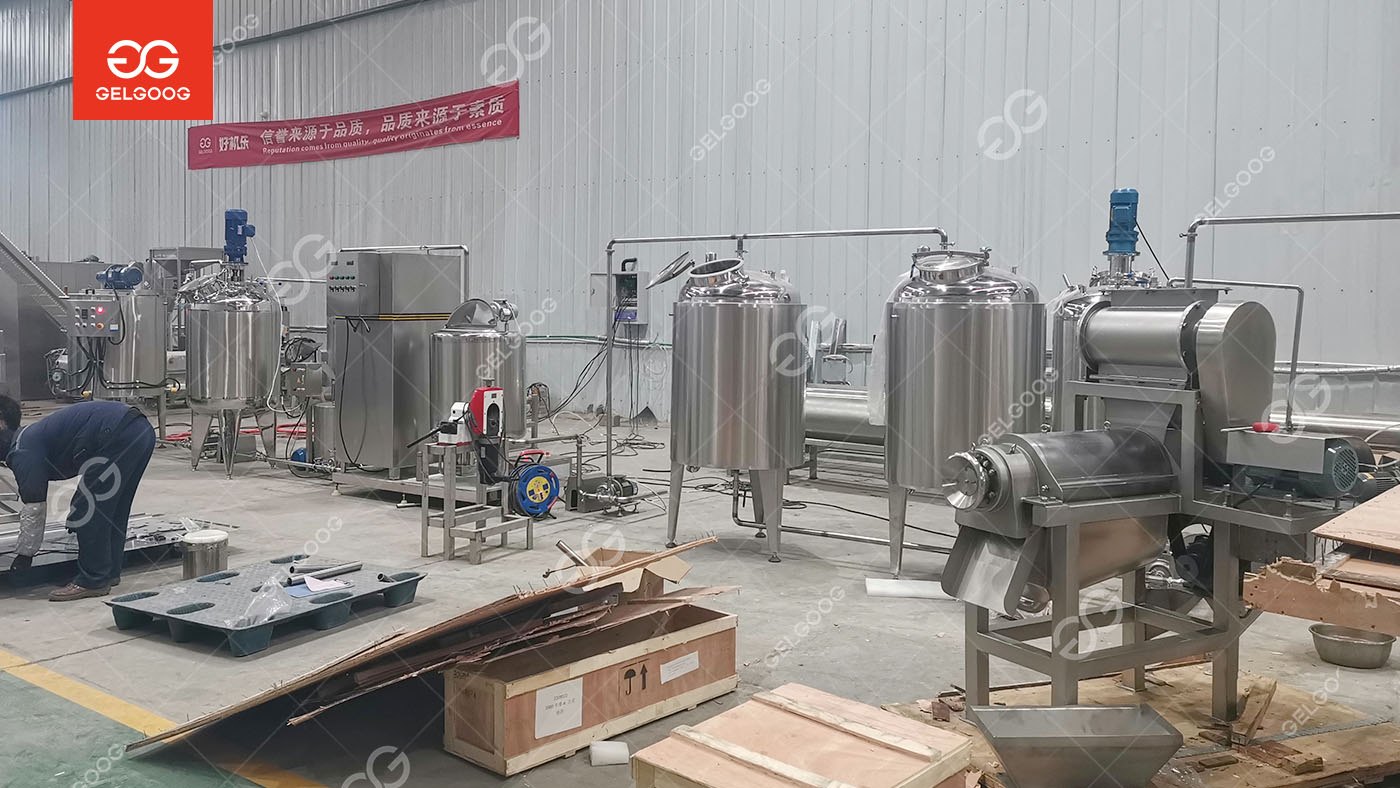
A project example published by GELGOOG.
View source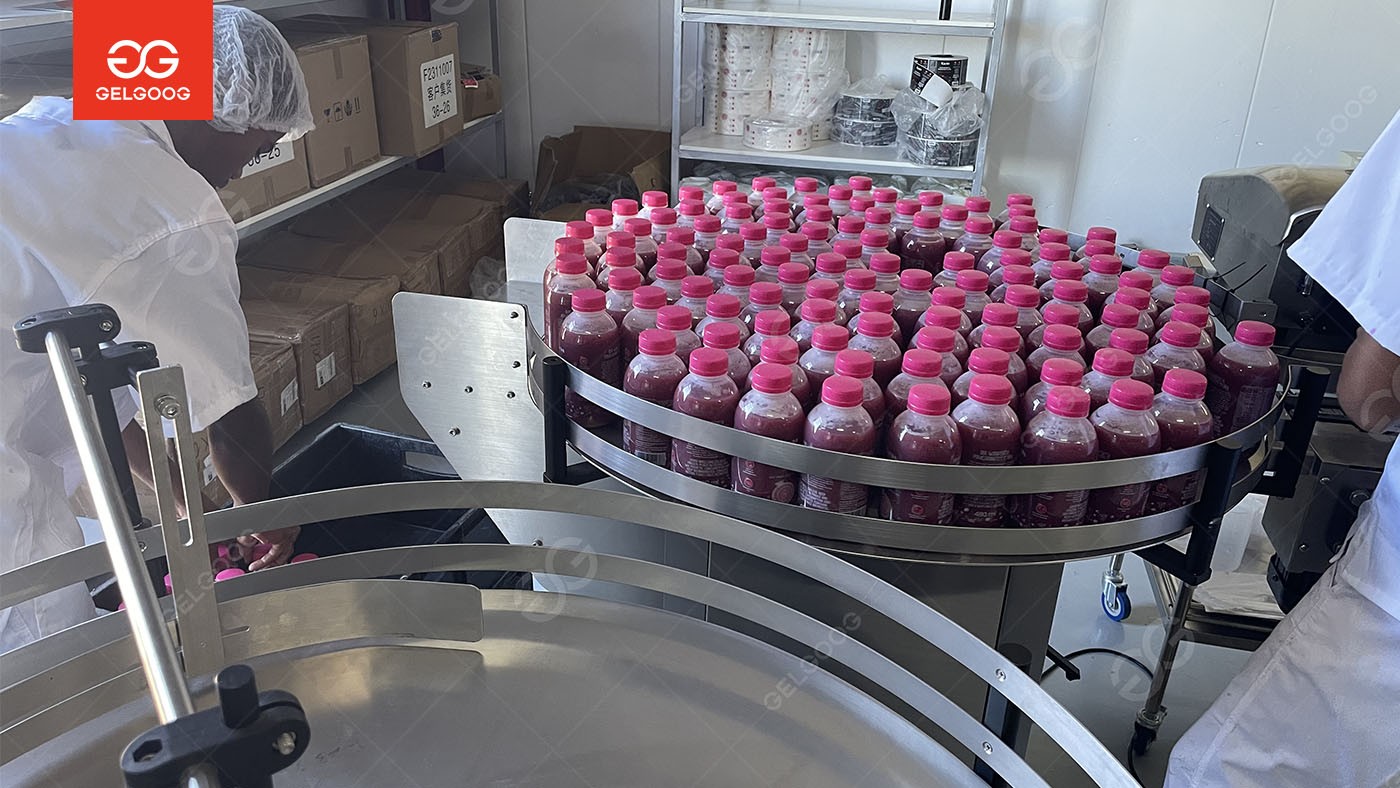
A project example published by GELGOOG.
View sourceTell us the product, required hourly output, available space and packaging requirements.